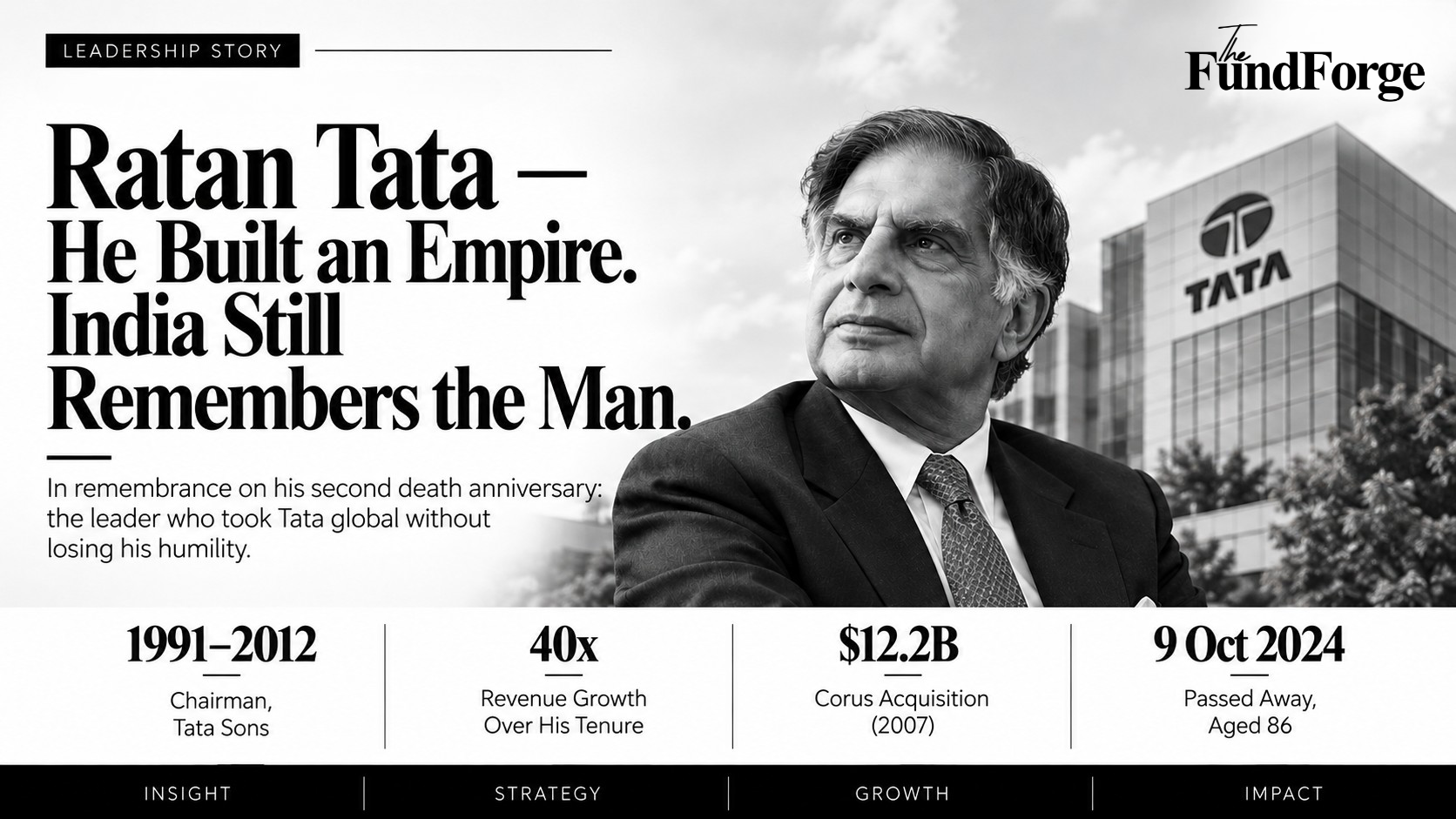
In Remembrance: How Ratan Tata Built a Global Group and Kept It Human
Ratan Tata led Tata Sons from 1991 to 2012, growing group revenue more than 40-fold and taking the Tata name global. On the second anniversary of his death, we remember the businessman and the human being. The Story: Ratan Tata, born in 1937, succeeded JRD Tata as chairman in March 1991. Over 21 years, he cleaned up a loosely run group and took it overseas. Tata Tea bought Tetley for $432 million in 2000. Tata Steel acquired Corus for $12.2 billion in 2007. Tata Motors bought Jaguar Land Rover from Ford for $2.23 billion in 2008. He won the Padma Bhushan in 2000 and the Padma Vibhushan in 2008. He stepped down in 2012, returned briefly as interim chairman in 2016, and spent his later years as Chairman Emeritus. He died on October 9, 2024, aged 86. Business Insight: His model was ownership with purpose. Because Tata Trusts hold about two-thirds of Tata Sons, the group’s profits fund philanthropy rather than just dividends. That structure shaped how the group made decisions: long-term, trust-led and public-minded. The FundForge Take: Great businesses are measured in revenue. Great leaders are remembered in how people felt around them. Ratan Tata managed both. Two years on, India isn’t just remembering a chairman. It’s remembering how to lead.