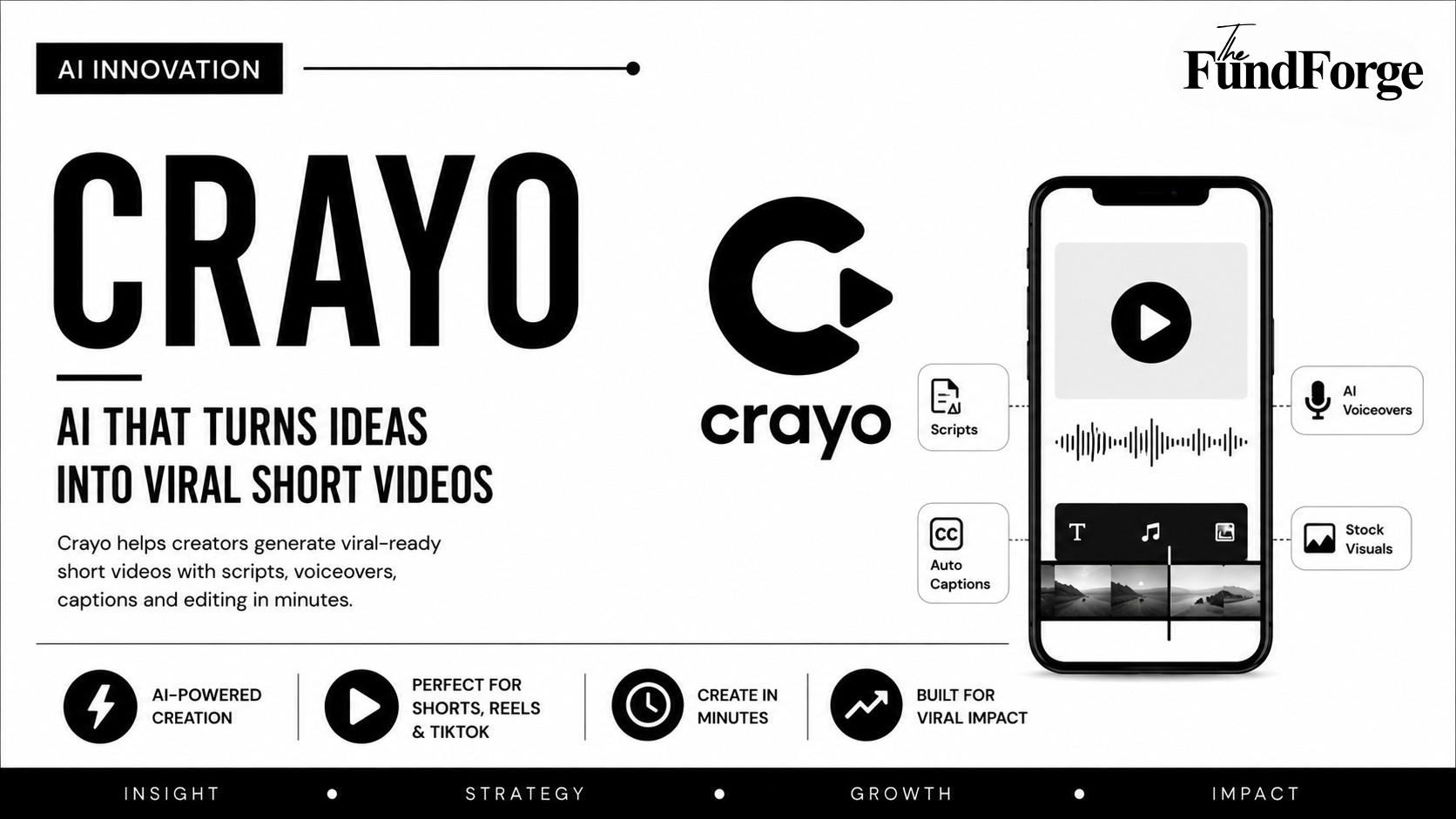
Founded in 2023 by then-17-year-old Daniel Bitton and Musa Mustafa, Crayo automates short-form video production — scripts, voiceovers, captions, and editing — and has grown to reportedly generate $600,000 in monthly revenue without institutional funding.
The Story
Bitton and Mustafa built Crayo's first version for roughly $10,000, and by Bitton's own account, it was rough at launch. Rather than delay for polish, they shipped early and iterated based on user feedback.
The product's core insight was narrow: short-form content creators spend disproportionate time on repetitive, unglamorous tasks — writing scripts, recording voiceovers, adding subtitles, sourcing background footage — and Crayo automated all of it into a single workflow.
When early distribution plans built around Snapchat were disrupted by platform changes, the team pivoted quickly to YouTube Shorts.
Growth came not from paid advertising but from an affiliate network of content creators who promoted Crayo directly to their audiences, turning users into a de facto marketing channel.
The platform has since generated more than 2.5 million videos and operates on a three-tier subscription model with no free tier.
Business Insight
Crayo's growth illustrates a pattern increasingly common in applied AI products: the underlying models (transcription, voice synthesis, text generation) are not proprietary breakthroughs, but the product's value comes from bundling them into a workflow tight enough to eliminate an entire category of manual work for a specific, well-defined user.
The FundForge Take
Crayo remains unfunded by traditional venture standards, built and scaled almost entirely through product-market fit and creator-led distribution.
As AI video tools proliferate and better-funded competitors like Canva and Synthesia expand into the same space, Crayo's real test will be whether a lean, founder-led team can defend a category it helped popularize without the capital reserves of its larger rivals.