Zomato Success Story: How a Restaurant Menu Website Became India's FoodTech Giant
Every successful startup begins by solving a simple problem.
For Zomato, that problem was surprisingly straightforward:
Finding restaurant menus online.
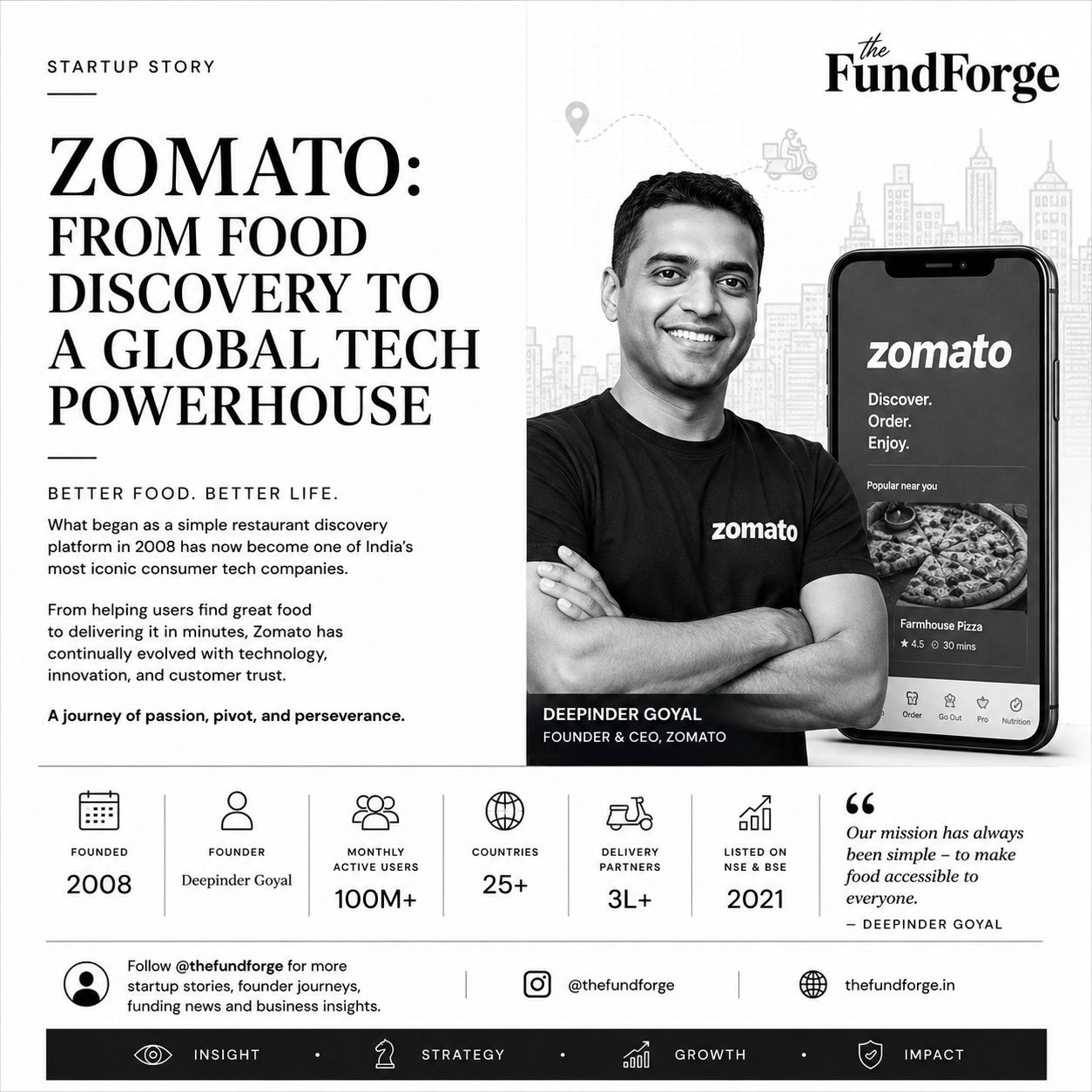
What started in 2008 as a digital menu platform has grown into one of India's most influential consumer technology companies.Today, Zomato serves millions of customers while powering restaurants, delivery partners, and the quick-commerce ecosystem.
The Beginning
While working at Bain & Company, Deepinder Goyal noticed employees waiting in line to browse printed restaurant menus. He realized there had to be a better way. Together with Pankaj Chaddah, he created Foodiebay, a website that digitized restaurant menus. The concept quickly gained traction.
In 2010, the company rebranded as Zomato, setting the stage for global expansion.
Beyond Restaurant Discovery
As smartphones became mainstream, consumer expectations changed. People no longer wanted to discover restaurants. They wanted food delivered. Zomato adapted. The company invested heavily in logistics, restaurant partnerships, technology, and customer experience to become one of India's leading food delivery platforms.
Expanding the Ecosystem
Rather than limiting itself to food delivery, Zomato expanded into:
- Restaurant management solutions
- Dining memberships
- Advertising for restaurants
- Blinkit (Quick Commerce)
- Hyperlocal delivery
This diversification positioned Zomato as a broader consumer-tech ecosystem.
Challenges Along the Way
Like every startup, Zomato faced significant hurdles:
- Intense competition
- Profitability concerns
- Pandemic disruptions
- Regulatory changes
Yet, continuous innovation and strategic decision-making enabled the company to evolve.
Key Lessons for Entrepreneurs
1. Start Small
Many billion-dollar companies begin by solving one simple problem exceptionally well.
2. Adapt Constantly
Consumer behavior changes quickly.
Winning companies evolve with it.
3. Build an Ecosystem
Long-term value comes from creating multiple revenue streams around customers.
4. Think Beyond Today
Zomato's transformation from restaurant discovery to quick commerce demonstrates the importance of long-term strategic thinking.
Zomato's story isn't just about food.
It's about identifying opportunities, adapting to change, and building products that become part of everyday life.
For entrepreneurs, the biggest lesson is clear:
Great companies don't just respond to change - they lead it.