WeWork: The $47 Billion Unicorn That Changed Startup History
Few startups have experienced a journey as extraordinary as WeWork.
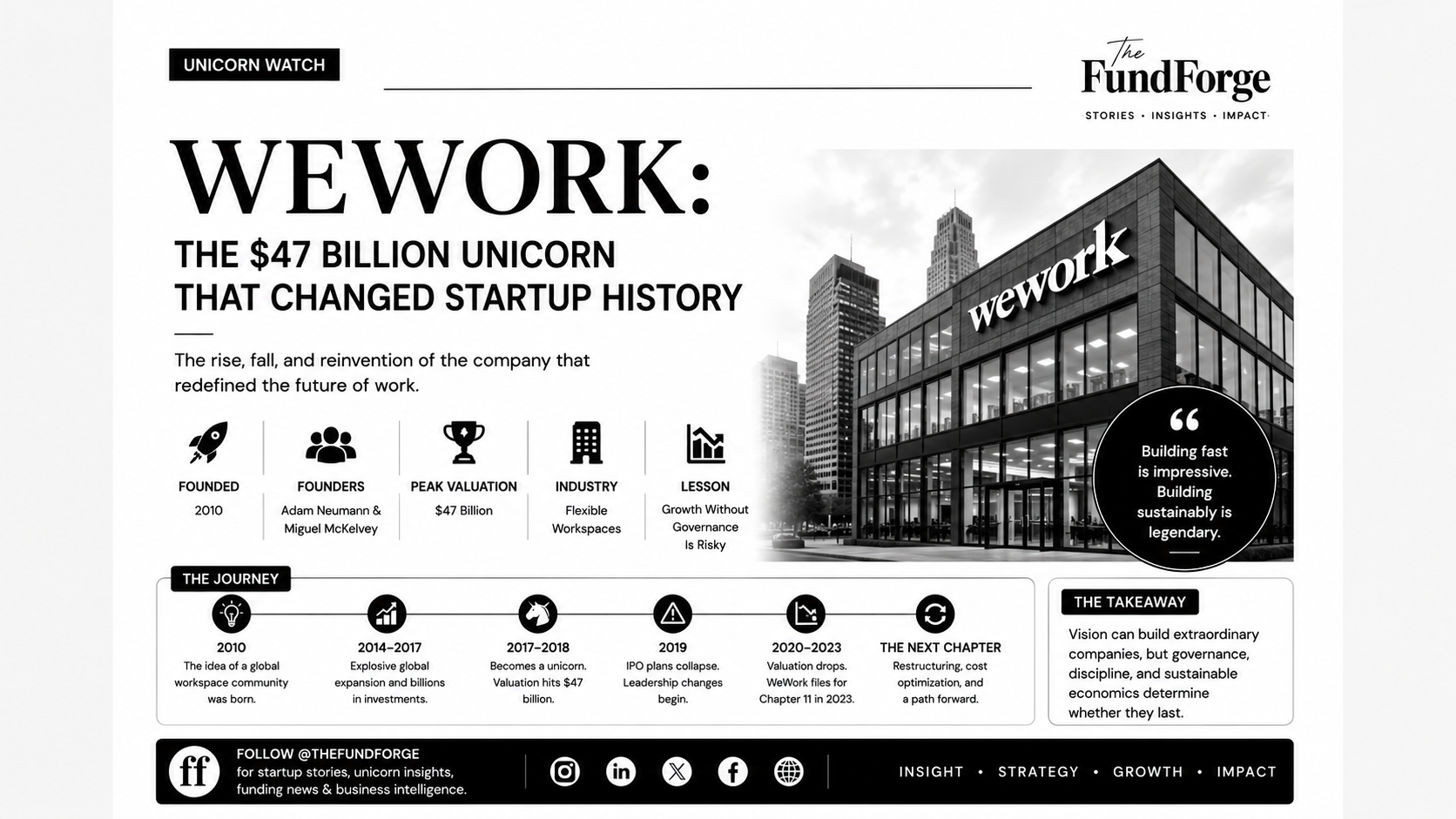
Founded in 2010 by Adam Neumann and Miguel McKelvey, WeWork wasn't just leasing office space—it was selling a new way of working. The founders envisioned workplaces that combined flexibility, collaboration, and community, catering to freelancers, startups, and enterprises alike.
The idea resonated globally.
Within a few years, WeWork expanded across major cities worldwide, attracting billions of dollars from investors, including SoftBank. The company's rapid expansion pushed its valuation to an astonishing $47 billion, making it one of the most valuable startups in the world.
However, behind the impressive growth were mounting financial losses, aggressive expansion strategies, and corporate governance concerns. In 2019, WeWork's planned initial public offering (IPO) exposed these issues, leading to intense scrutiny from investors. The IPO was withdrawn, Adam Neumann stepped down as CEO, and the company's valuation declined dramatically.
In 2023, WeWork filed for Chapter 11 bankruptcy protection in the United States as part of a financial restructuring process. Despite this setback, the company continued operating while renegotiating leases, reducing costs, and restructuring its business.
Today, WeWork remains one of the most influential startup stories ever told—not only because of its meteoric rise but also because of the lessons it offers entrepreneurs, investors, and business leaders.
Why WeWork Changed the Industry
WeWork transformed commercial real estate by making flexible office spaces mainstream. It demonstrated that workplaces could be more than offices—they could become communities that foster collaboration, creativity, and entrepreneurship.
Key Highlights
- Founded in 2010
- Founders: Adam Neumann & Miguel McKelvey
- Peak valuation: $47 billion
- Expanded to hundreds of locations worldwide
- Popularized the global coworking movement
- Faced governance challenges and a failed IPO
- Restructured operations after filing for Chapter 11 bankruptcy protection in 2023
The FundForge Take
WeWork proves that vision can build extraordinary companies—but governance and financial discipline determine whether they endure.
The company's rise inspired a generation of entrepreneurs to think bigger, while its challenges reminded founders that sustainable growth, transparent leadership, and sound economics are essential for long-term success.