BlackBuck Success Story: Building India's Logistics Unicorn
India's trucking industry has long been the backbone of the nation's economy, moving goods across thousands of cities and towns. Yet for decades, the sector remained fragmented, inefficient, and largely offline.
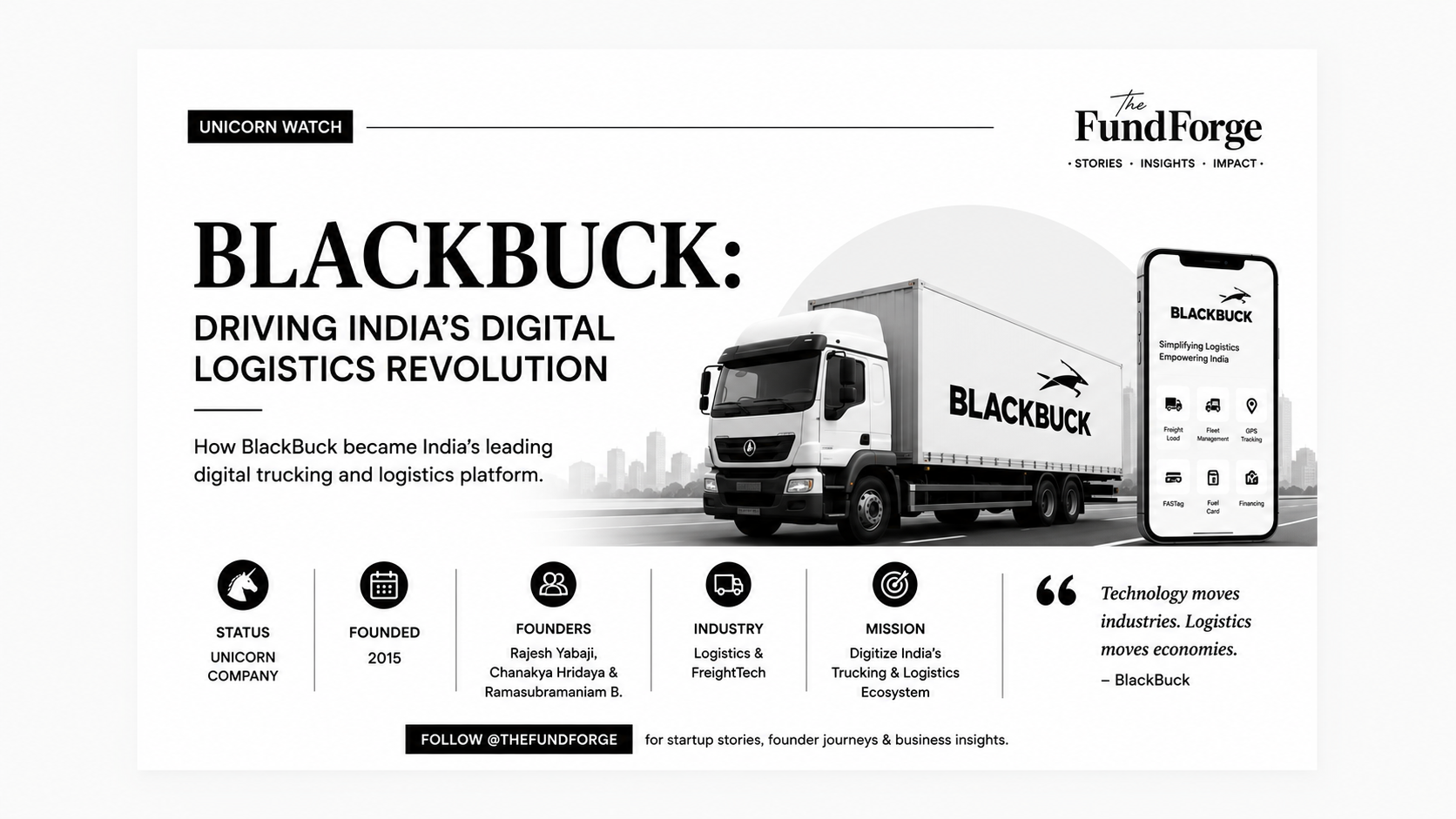
In 2015, Rajesh Yabaji, Chanakya Hridaya, and Ramasubramaniam B. founded BlackBuck with a mission to bring technology to India's logistics ecosystem.
The company started as a digital freight marketplace, connecting businesses with truck operators to improve freight utilization and reduce inefficiencies. As adoption grew, BlackBuck expanded beyond freight matching to create a comprehensive digital platform for truck owners and fleet operators.
Today, the company offers services including GPS-based fleet tracking, FASTag management, fuel cards, toll payments, vehicle financing, insurance, and digital financial solutions. By integrating multiple services into one ecosystem, BlackBuck has become an essential partner for logistics businesses across India.
Its technology-driven approach attracted significant investment from leading global venture capital firms and helped the company achieve unicorn status, reinforcing investor confidence in India's logistics technology sector.
Why BlackBuck Stands Out
Unlike traditional logistics companies, BlackBuck built a digital ecosystem that solves multiple pain points for truck owners, transporters, and enterprises. This platform approach has enabled it to scale efficiently while improving transparency, operational efficiency, and financial inclusion within the trucking industry.
Key Highlights
- Unicorn Company
- Founded in 2015
- Founders: Rajesh Yabaji, Chanakya Hridaya & Ramasubramaniam B.
- Industry: Logistics & Freight Technology
- Headquarters: Bengaluru, India
- Services: Freight Marketplace, GPS Tracking, FASTag, Fuel Cards, Financing & Fleet Management
- Serving millions of truckers and thousands of businesses across India
The FundForge Take
BlackBuck demonstrates that some of the biggest startup opportunities exist in industries that have historically lacked technology adoption. By digitizing logistics, the company has improved efficiency across one of India's most critical sectors while creating a scalable business model with long-term impact.