Fashinza: Building the Digital Infrastructure Behind Global Fashion
Every year, billions of garments move through one of the world's most complex supply chains.
Yet much of the industry still relies on fragmented communication, manual processes, and limited production visibility.
Fashinza believes technology can change that.
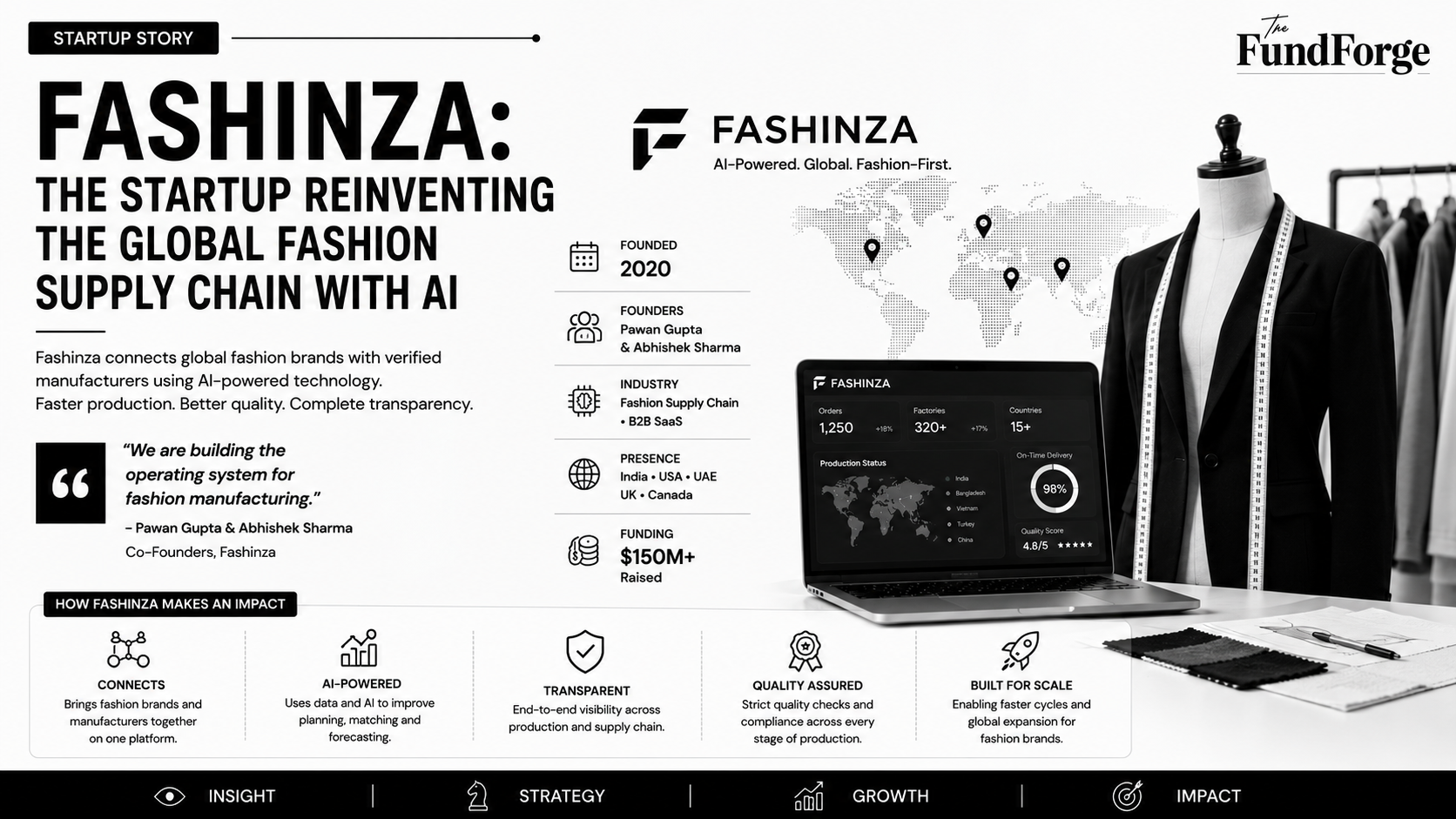
Founded in 2020 by Pawan Gupta and Abhishek Sharma, the company is building an AI-powered manufacturing platform that connects global fashion brands with verified factories through a transparent digital ecosystem.
The Problem
Fashion brands often face multiple operational challenges:
- Finding reliable manufacturers
- Managing production timelines
- Maintaining quality standards
- Coordinating logistics
- Monitoring factory performance
These inefficiencies increase costs while slowing product launches.
The Solution
Fashinza digitizes the entire production journey.
Using AI and data-driven workflows, brands can manage sourcing, manufacturing, collaboration, quality checks, and delivery through one platform.
Manufacturers also benefit by gaining access to international customers and technology that improves operational efficiency.
Funding and Growth
The company's vision has attracted strong institutional backing.
Over the years, Fashinza has raised more than $150 million from investors including Accel, Elevation Capital, Prosus Ventures, WestBridge Capital, and others.
The business has also expanded internationally, serving brands across North America, Europe, the Middle East, and Asia while continuing to invest in AI-powered manufacturing technology.
Why It Matters
As consumer demand shifts toward faster product cycles and greater supply chain transparency, fashion companies require smarter manufacturing infrastructure.
Platforms like Fashinza enable brands to make faster decisions while helping factories operate more efficiently in an increasingly competitive global market.
The FundForge Take
Fashinza demonstrates that some of the world's biggest innovation opportunities exist far beyond consumer-facing products.
By applying artificial intelligence to manufacturing and supply chain operations, the company is modernizing an industry that has historically relied on fragmented processes and limited visibility.
As businesses continue to prioritize speed, transparency, and sustainability, technology platforms that strengthen industrial infrastructure are likely to become just as valuable as the brands they support.