
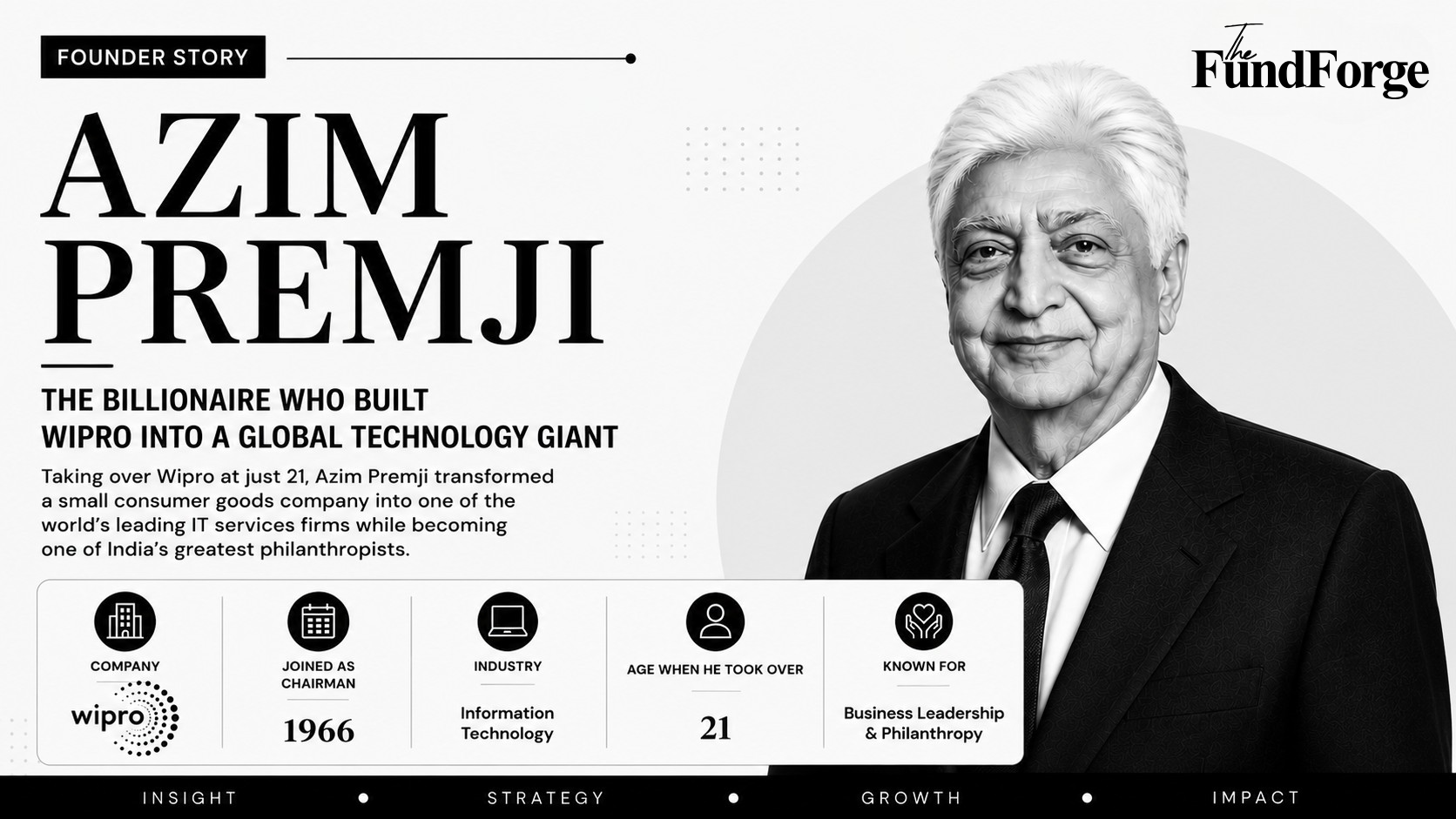
Azim Premji is one of India's most respected business leaders. After taking charge of Wipro at the age of 21, he transformed the company from a vegetable oil manufacturer into a global IT services giant. Alongside his business achievements, he is globally recognized for his extraordinary contributions to education and philanthropy.
The Story
In 1966, tragedy struck when Mohamed Hasham Premji, founder of Wipro, passed away unexpectedly.
His 21-year-old son, Azim Premji, left Stanford University and returned to India to lead the family business.
At the time, Wipro was primarily known for manufacturing vegetable oil and consumer products.
Rather than simply continuing the existing business, Premji recognized the long-term potential of technology.
During the 1980s and 1990s, Wipro entered the information technology sector, investing heavily in software development, engineering services, and global consulting.
This strategic transformation positioned Wipro among India's pioneering IT companies alongside other industry leaders.
Under Premji's leadership, Wipro expanded globally, serving Fortune 500 companies and becoming one of India's most recognized technology brands.
Equally remarkable is his commitment to giving back.
Through the Azim Premji Foundation and the Azim Premji Philanthropic Initiatives, he has pledged the majority of his wealth toward improving education, healthcare, and social development in India.
His philosophy has always remained simple:
Business success matters—but creating lasting societal impact matters even more.
Why It Matters
Azim Premji's journey is more than the story of Wipro.
It is a lesson in strategic transformation, ethical leadership, and responsible capitalism.
He demonstrated that companies can create shareholder value while contributing meaningfully to society.
The FundForge Take
Many entrepreneurs build successful companies.
Few build institutions that outlast them.
Azim Premji transformed Wipro into a global technology leader, but his greatest legacy may be his commitment to using wealth as a force for public good.
His story reminds us that the most enduring leaders create value not only for markets—but for society as a whole.